


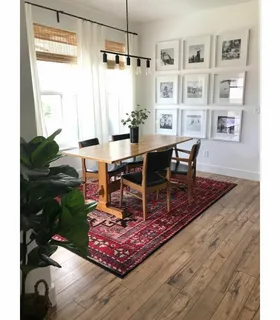
The dining room often acts as the command center of a house. It serves as a place for family meals, homework sessions, remote work, and late-night conversations. Because of this, dining room floors endure a significant amount of stress. Chairs scrape back and forth, food drops from plates, and drinks spill.
Many homeowners skip putting a rug under the table because they fear the mess. They worry about stains ruining a beautiful textile or crumbs getting lost in deep fibers. But a bare floor carries its own risks, like scratches on wood or echoing noise during dinner parties.
The right rug protects your floor and grounds the space. It adds warmth and defines the eating area. You simply need to know which features handle the chaos of daily life. This guide breaks down exactly how to choose Dining Room Rugs that withstand high traffic without sacrificing style.
What to Look for Before You Buy
Buying a rug for a low-traffic guest bedroom is easy. Buying one for a dining room requires strategy. You need a balance of durability and practicality. Before you look at colors or price tags, evaluate the rug’s construction.
Pile Height Matters
The “pile” refers to the density and height of the fibers. In a dining room, a low pile or flat weave is your best friend. High-pile rugs, like shags, trap crumbs and dust deep within their fibers. They are nearly impossible to vacuum effectively. Furthermore, chair legs tend to get stuck in thick piles, making it difficult to slide chairs in and out.
A flat weave or low-pile rug allows chairs to glide smoothly. It also keeps crumbs on the surface, where a vacuum or broom can easily reach them.
Durability and Construction
Hand-knotted rugs are generally more durable than machine-made options. They hold together tight and resist unraveling even with heavy foot traffic. While the upfront cost is higher, a quality hand-knotted rug can last for decades, whereas a cheaper alternative might look worn out within a year or two.
The Best Materials for High-Traffic Dining Areas
The material determines how long your rug lasts and how easy it is to clean. Not all fibers are equal when it comes to food stains and heavy furniture.
Wool: The Gold Standard
Wool remains the top choice for dining rooms. It is naturally resilient. The fibers contain lanolin, a natural oil that repels moisture and stains. If you spill wine on a wool rug, it tends to bead up on the surface for a moment, giving you time to blot it away.
Wool fibers also have a “memory.” They spring back into shape after being compressed. This means the heavy legs of a dining table won’t leave permanent dents as easily as they would on softer fibers. While wool can be an investment, its longevity makes it cost-effective.
Synthetic Fibers
Materials like polypropylene or nylon are popular for their price point and stain resistance. These are non-porous, meaning they don’t absorb liquid easily. You can often scrub them vigorously without damaging the fibers. However, they can lack the luxurious feel of natural materials and may flatten faster under heavy furniture.
Materials to Avoid
Avoid silk or viscose in the dining room. These materials are delicate. Water acts like acid to viscose, often leaving a permanent yellow stain. They cannot handle the abrasion of sliding chairs. Save these materials for bedrooms or formal living areas where shoes are off and food is banned.
Sizing: The Golden Rule of Chair Legs
The most common mistake people make is buying a rug that is too small. A “skimp” rug looks awkward and creates a tripping hazard.
Follow this rule: The rug should extend at least 24 inches (60 cm) beyond all sides of the table.
Why? When a guest sits down and pulls their chair out, the back legs of the chair should remain on the rug. If the back legs drop off the edge of the rug, the chair becomes unstable. It creates an annoying “bump” every time someone stands up, and that friction will ruin the edge of your rug over time.
Matching Shape to Table
Creating visual harmony is simple if you match the rug shape to your table:
- Rectangular tables look best with rectangular rugs.
- Round tables work well with round or square rugs.
- Oval tables pair nicely with rectangular rugs.
Measure your table, add 24 to 30 inches to every side, and that is your minimum rug size.
Patterns and Colors That Hide the Mess
If you have young children or host frequently, a stark white or solid pastel rug is a risky move. It highlights every speck of dirt and every drop of spaghetti sauce.
The Power of Pattern
Intricate patterns are excellent at camouflage. Persian styles, complex geometrics, or floral motifs break up the visual field. If a small stain occurs that you can’t quite remove, a busy pattern hides it from the naked eye. The design distracts the viewer, keeping the focus on the art rather than the wear and tear.
darker Tones Work Harder
You don’t need to choose a black rug, but medium-to-dark tones generally fare better in dining rooms. Deep reds, navies, warm browns, and greys are forgiving. If you prefer a lighter look, opt for a “greige” (grey-beige) or a heathered oatmeal color rather than a flat cream.
Where to Find Premium Handmade Rugs in India
Finding a rug that ticks all these boxes—durable, stylish, and correctly sized—can be a challenge. You want a piece that brings character to your home, not a mass-produced item that falls apart.
This is where The Ambiente stands out.
Based in Delhi and born from the rug hub of Bhadohi, The Ambiente is a design-led atelier that understands the needs of Indian homes. Founded by Avani Khandelwal, the brand bridges the gap between traditional craftsmanship and modern utility.
Why Choose The Ambiente?
- Heritage and Expertise: They are backed by Bhadohi Carpets, a parent company with over 30 years of manufacturing experience. They know how to build a rug that lasts.
- Ethical Craftsmanship: They employ over 4,000 women weavers. When you buy from them, you support sustainable livelihoods in rural India.
- Curated for Real Homes: Their collections blend the rich culture of Uttar Pradesh with contemporary aesthetics. They offer bespoke options, so if you need a specific size for your dining table, they can create it.
If you are looking for premium Handmade Rugs in India, The Ambiente offers a range that goes from affordable to luxury, ensuring you find the right fit for your dining space.
Maintenance Tips for Longevity
Once you invest in a quality rug, a few simple habits will keep it looking new for years.
- Vacuum Smart: Vacuum your dining room rug regularly to keep crumbs from settling into the weave. If you have a wool rug, turn off the “beater bar” on your vacuum to prevent it from pulling at the natural fibers.
- Rotate Often: Dining rooms often have specific wear patterns—usually right where the host sits or near the entrance to the kitchen. Rotate your rug 180 degrees every six months to ensure it wears evenly.
- Blot, Don’t Rub: When a spill happens (and it will), do not scrub it. Scrubbing pushes the liquid deeper into the fibers and can distort the pile. Instead, take a clean, white cloth and press down firmly to absorb the liquid.
- Use Pads: Always place a rug pad underneath. In a dining room, a pad prevents the rug from bunching up as chairs slide back and forth. It also adds a layer of cushioning that protects the rug’s structure.
Style Your Dining Room with Confidence
A dining room rug finishes the room. It dampens sound, protects your floors, and adds a layer of sophisticated comfort. By choosing the right material—like durable wool—and the correct size, you ensure your investment survives holiday dinners and daily breakfasts alike.
Don’t let the fear of spills keep you from a stylish home. Prioritize low-pile construction and forgiving patterns. When you are ready to upgrade your space, visit The Ambiente to buy rugs online or in-store. Their collection proves that you can have a home that is both beautiful and lived-in.