


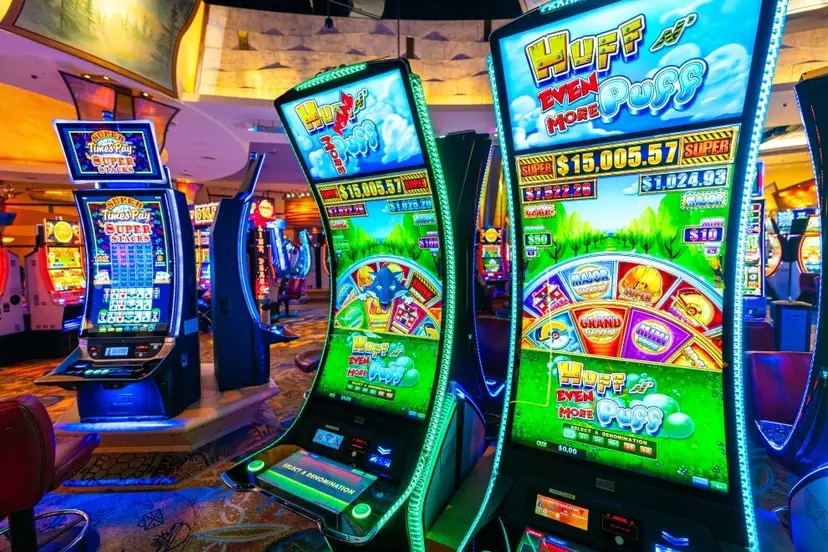
Walk into a casino or browse an online casino lobby and you may hear players describe certain slots as “hot” or “cold.” A hot machine is supposedly one that is paying frequently, while a cold machine is believed to have gone too long without producing a meaningful win.
These ideas are common in gambling conversations, but they often misunderstand how modern slot machines work.
Understanding the difference between perception and probability can help slot zeus players make more informed decisions and avoid chasing patterns that may not actually exist.
What Does a “Hot” Slot Mean?
A hot slot is generally described as a machine that has recently produced several winning combinations or large payouts.
Players may see a machine generate frequent wins and conclude that it is “hot.”
Some may then believe that the machine is likely to continue paying.
However, previous results do not necessarily influence future random outcomes.
What Is a “Cold” Slot?
A cold slot is usually described as one that has recently produced few wins or has gone through a long losing sequence.
A player might think:
“This machine hasn’t paid anything for a while, so it must be due.”
That conclusion is usually based on the gambler’s fallacy.
A random game does not necessarily compensate players for previous losses.
How Random Number Generators Work
Modern electronic and online slots generally use a Random Number Generator (RNG) to determine game outcomes.
The RNG produces results according to the game’s mathematical design.
Each spin is evaluated according to the applicable rules and probabilities.
A previous losing spin does not automatically make the next spin more likely to win.
Likewise, a previous jackpot does not necessarily make the next spin less likely to produce another significant result.
The Gambler’s Fallacy
The gambler’s fallacy is the belief that if a random event has occurred repeatedly, the opposite result becomes “due.”
Consider a coin.
If it lands on heads five times in a row, some people assume tails is now more likely.
If the coin is fair and each flip is independent, the probability of tails on the next flip has not increased simply because heads appeared repeatedly.
Slot outcomes are more complicated than coin flips, but the basic principle of independent random events is useful for understanding why losing streaks do not automatically create future wins.
Why Slots Can Appear Hot
A slot can certainly produce a series of winning outcomes.
Random sequences naturally include clusters.
Imagine rolling a die many times.
You may occasionally see the same number appear several times close together.
That does not mean the die has become “hot.”
Similarly, a slot can experience a temporary cluster of wins without changing its underlying mathematics.
Why Slots Can Appear Cold
The same principle works in reverse.
A slot can experience a long sequence without a major payout.
That does not necessarily mean something is wrong with the machine.
Random sequences can contain long periods where particular outcomes do not appear.
A cold-looking machine is not automatically preparing to pay.
Short-Term Results Can Be Misleading
Slot mathematics are generally designed around extremely large numbers of plays.
The theoretical RTP of a game describes expected behavior over a very large sample.
Individual sessions can differ dramatically from that long-term theoretical expectation.
A player can experience:
- Several large wins
- A long losing streak
- Frequent small payouts
- An unusually successful session
None of these necessarily proves that a machine has changed state.
Understanding RTP
Return to Player (RTP) is one of the most important mathematical concepts in slot gaming.
Suppose a slot has a theoretical RTP of 96%.
This means the game is designed to return approximately $96 for every $100 wagered over an extremely large number of plays, according to its mathematical model.
It does not mean that a player who wagers $100 should expect to receive exactly $96 during one session.
Short-term results can be much higher or lower.
RTP Does Not Create a “Due” Win
Suppose a slot has a theoretical RTP of 96% but happens to return only 70% during a particular short sequence.
That does not mean the next group of spins must compensate by returning 122%.
The theoretical RTP is not a balancing mechanism that forces every short-term period to reach the expected percentage.
This is one of the most important points to understand about slot mathematics.
What About a Machine That Has Not Paid a Jackpot?
Players sometimes believe a progressive jackpot becomes increasingly likely to hit because it has not been won recently.
That depends entirely on the specific jackpot mechanism.
A jackpot may have defined conditions or a must-drop feature, but simply observing that a jackpot has not been won recently does not establish that it is “due.”
The game’s rules determine how the jackpot works.
Progressive Jackpots Are Different
Progressive jackpots can increase as qualifying wagers contribute to the prize pool.
The jackpot value can therefore change over time.
However, a larger jackpot does not automatically mean that the next spin has a predictable winning outcome.
The probability and eligibility rules remain important.
Why Players Search for Hot Machines
The idea of hot machines is attractive because it appears to offer a simple strategy.
If a machine has been paying, perhaps it will keep paying.
If another machine has been losing, perhaps it should be avoided.
This creates a narrative of discovering a machine’s current “mood.”
Modern RNG-based slots do not generally work this way.
The Illusion of Control
Humans naturally look for patterns.
When random events occur, we often try to find explanations.
A player may notice that a particular slot produced a large win yesterday and conclude that it is a good machine.
Another player may see repeated losses and assume the machine is “tight.”
These observations can influence decisions even when they provide no reliable predictive information.
Casino Floors Can Reinforce the Myth
Physical casinos often contain many machines positioned close together.
Players can observe other people winning.
When a machine makes loud sounds or displays a major win, nearby players immediately notice.
This can create the impression that certain machines are particularly active.
However, visible wins do not reveal the full history of wagers and losses occurring on the machine.
Online Casinos Create Similar Effects
Online slots can produce the same psychological effect through leaderboards, win notifications, jackpot banners, and promotional messages.
A platform may prominently display a large recent win.
That can make the game appear unusually successful.
But seeing another player’s win does not mean the same result is more likely for the next player.
Near Misses Can Also Be Misleading
A near miss occurs when symbols appear close to a winning combination but do not actually qualify.
For example, two jackpot symbols might appear while another reel stops just one position away.
This can feel like the player was almost successful.
However, a near miss does not necessarily mean the next spin has a higher probability of producing the jackpot.
The underlying outcome is still determined by the game’s mathematical system.
Does Changing Machines Improve Your Odds?
Switching from a supposedly cold machine to a supposedly hot one does not automatically improve the player’s mathematical position.
If both games have similar characteristics, moving between them based only on recent results provides no reliable advantage.
Players should instead compare objective information such as RTP, volatility, betting range, and game rules.
What About Casino Location?
Some players believe certain machines are positioned in favorable areas of a casino.
They may assume machines near entrances or high-traffic areas pay more.
Unless the game or machine is specifically designed with different mathematics, physical location does not inherently make a machine more likely to win.
Placement can influence visibility and player behavior, but it is not evidence of better probabilities.
“Loose” and “Tight” Slots
The terms “loose” and “tight” are sometimes used interchangeably with hot and cold.
A loose slot is supposedly one that pays frequently.
A tight slot is believed to pay less often.
These labels can be misleading.
A game’s actual characteristics are better understood through its mathematical information, including RTP and volatility.
Volatility Is Not the Same as Hot or Cold
Volatility describes how a slot’s payouts are distributed.
A high-volatility game may produce larger payouts less frequently.
A low-volatility game may produce smaller payouts more frequently.
This is a structural characteristic of the game.
Hot and cold descriptions, by contrast, usually refer to recent results and are not reliable measures of a game’s current state.
Hit Frequency Provides More Useful Information
Some games publish or otherwise describe hit frequency.
This can indicate how often a game is expected to produce a qualifying winning event under its mathematical model.
Even then, hit frequency does not predict the outcome of the next spin.
It is a statistical characteristic, not a short-term forecasting tool.
Why a Winning Streak Can Continue
A winning streak does not necessarily mean that a slot has entered a special hot mode.
Random sequences can naturally contain multiple favorable outcomes.
The same applies to losing streaks.
The existence of a streak alone does not demonstrate that the underlying probabilities have changed.
Why Chasing Hot Machines Can Be Risky
Believing a machine is hot can encourage players to increase their wagers.
A player might think:
“It’s paying right now, so I should bet more before the streak ends.”
This can quickly increase financial exposure.
The same issue can occur when chasing a cold machine.
A player may increase bets because they believe a win is overdue.
Neither approach provides a guaranteed mathematical advantage.
A Better Way to Evaluate a Slot
Instead of asking whether a machine is hot or cold, consider objective information.
Look at:
- RTP
- Volatility
- Minimum and maximum bet
- Paytable
- Bonus mechanics
- Maximum win
- Jackpot rules
- Responsible-gaming features
These characteristics provide much more useful information than recent anecdotal results.
Bankroll Management Matters More
Even when playing a slot with a known RTP and volatility, short-term outcomes remain uncertain.
Bankroll management can therefore be more useful than attempting to identify hot or cold machines.
Set a spending limit before playing and avoid increasing it simply because the game appears to be winning or losing.
Take Breaks During Long Sessions
Long sessions can make patterns appear more meaningful than they really are.
A player who watches hundreds of spins may start identifying streaks, cycles, or “due” outcomes.
Taking breaks can provide an opportunity to reassess spending and avoid emotional decisions.
The Role of Responsible Gaming Tools
Many modern platforms offer tools such as:
- Deposit limits
- Session reminders
- Time-outs
- Cooling-off periods
- Self-exclusion
- Account activity statements
These features can help players maintain control regardless of whether a machine appears hot or cold.
The Bottom Line on Hot and Cold Slots
There is no reliable reason to assume that a machine becomes more likely to win because it has recently won.
Likewise, a machine does not necessarily become more likely to win because it has experienced a long losing sequence.
Random outcomes can naturally produce streaks, clusters, and unusual results.
The appearance of a pattern does not prove that the underlying probabilities have changed.
Conclusion
The idea of “hot” and “cold” slot machines is one of the most persistent myths in gambling. A slot that has recently produced several wins may appear hot, while one experiencing losses may seem cold. But recent outcomes alone do not provide a reliable method for predicting future results.
RNG technology, RTP, volatility, and the game’s mathematical design are far more important than anecdotal streaks. A cold-looking slot is not automatically due for a win, and a hot-looking slot is not guaranteed to continue paying.
The smartest approach is to stop looking for hidden moods in slot machines and focus instead on information that can actually be evaluated. Understand the game’s rules, know its mathematical characteristics, set a clear budget, and treat each spin as an independent gambling event rather than part of a predictable winning cycle.